
In cleanroom environments, ultrapure water is essential for maintaining product integrity and preventing contamination. You’re likely aware that achieving ultrapure water involves advanced methods like reverse osmosis and deionization, ensuring resistivity exceeds 18.2 MΩ·cm Demineralized water. However, understanding the stringent quality standards and testing procedures is just as important. As you navigate the complexities of ultrapure water management, you’ll discover that there are several challenges and best practices that can greatly impact operational efficiency.
Understanding Ultrapure Water
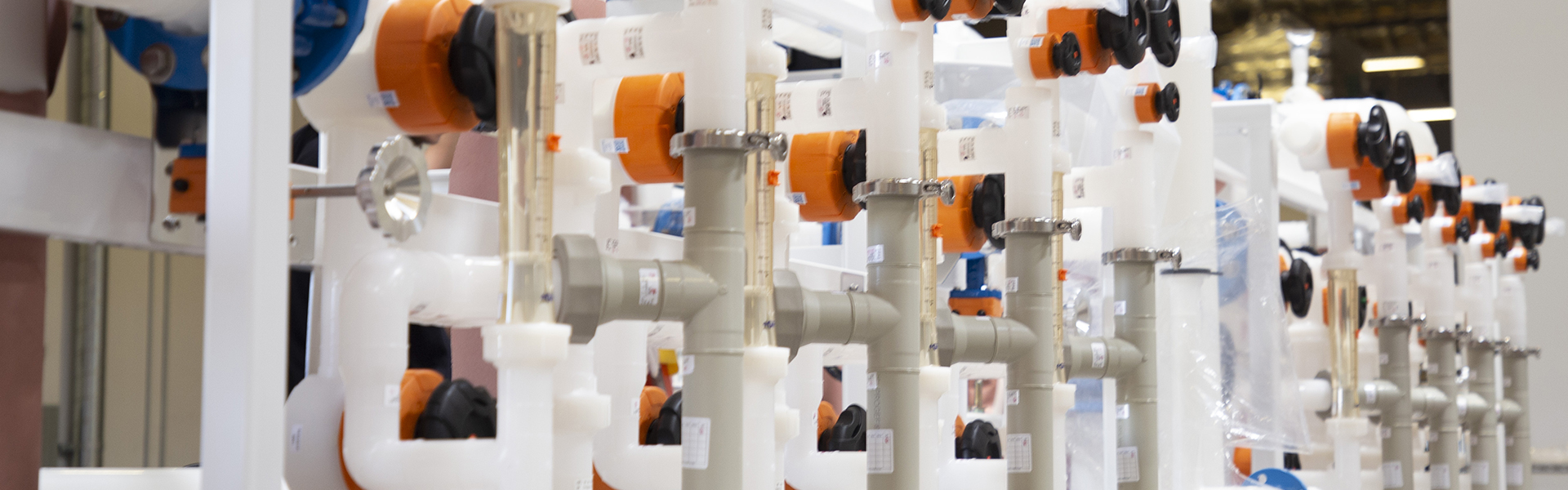
When you explore the domain of ultrapure water Lab Alliance, it’s crucial to understand its unique properties and applications, especially in cleanroom environments.
Ultrapure water is produced through advanced water purification techniques, including reverse osmosis, deionization, and distillation. These methods effectively remove impurities like ions, organic compounds, and microorganisms, resulting in water with a resistivity greater than 18.2 MΩ·cm.
The ultrapure benefits are significant for industries requiring stringent cleanliness standards. In semiconductor manufacturing, for instance, even minute contaminants can lead to defects in products.
Utilizing ultrapure water guarantees that processes remain uncontaminated, promoting product integrity and operational efficiency. Additionally, it supports various analytical applications, enhancing the reliability of research outcomes.
Understanding these aspects of ultrapure water not only empowers you to make informed decisions but also fosters a deeper appreciation for the meticulous processes behind water purification in cleanroom environments.
Key Applications of Ultrapure Water in Cleanrooms
Ultrapure water plays a crucial role in various cleanroom applications across industries that demand high levels of purity. In pharmaceutical manufacturing, it’s essential for formulation, cleaning equipment, and rinsing containers to guarantee product integrity and compliance with stringent regulatory standards. Using ultrapure water minimizes the risk of contamination, safeguarding the efficacy of drugs.
In semiconductor fabrication, ultrapure water is critical for photolithography and wafer cleaning processes. It removes particles and contaminants without introducing new impurities, which is essential for achieving high yield rates and maintaining the performance of microchips.
By utilizing ultrapure water, you guarantee that your cleanroom environment meets the necessary cleanliness levels, promoting operational efficiency and product quality.
Both industries rely on ultrapure water not just for cleaning, but also as a key ingredient in processes that demand the utmost purity, ultimately driving innovation and maintaining competitive advantages.
Production Methods for Ultrapure Water
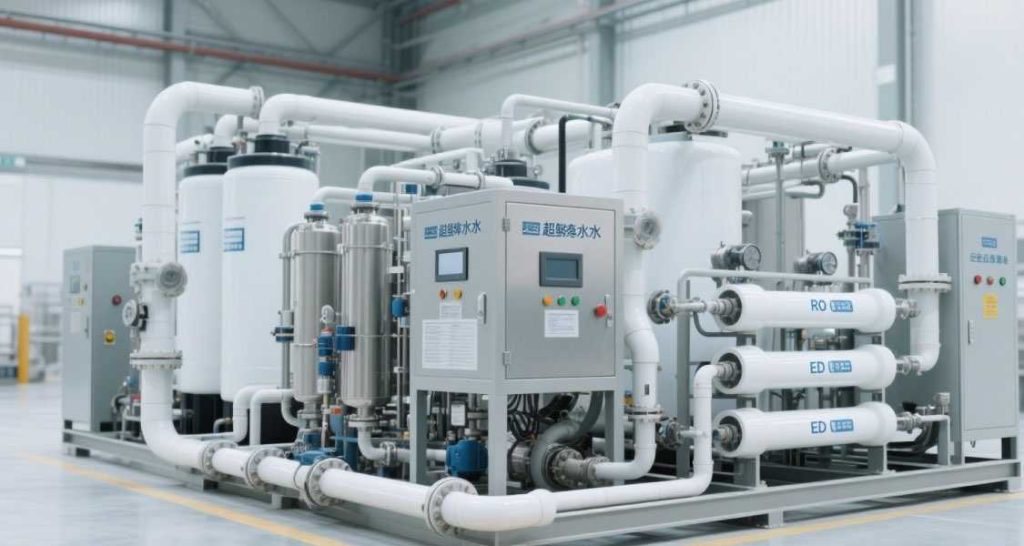
To produce ultrapure water, you’ll find that distillation and reverse osmosis are vital methods.
Distillation effectively removes impurities through boiling and condensation, while reverse osmosis relies on a semipermeable membrane to filter out contaminants.
Understanding these processes is essential for ensuring the high purity levels required in cleanroom environments.
Distillation Process Explained
Distillation stands out as one of the most effective methods for producing ultrapure water, employing a systematic approach to separate contaminants from H2O.
You’ll find that distillation techniques involve heating water to its boiling point, converting it into vapor while leaving impurities behind. As the vapor cools, it condenses back into liquid form, resulting in high water purity.
This process effectively removes salts, organic compounds, and microorganisms, ensuring the water meets stringent quality standards. The repeated cycles of distillation enhance purity further, making it ideal for cleanroom applications.
Reverse Osmosis Importance
While distillation effectively purifies water, reverse osmosis (RO) plays an essential role in producing ultrapure water, especially in cleanroom settings.
RO utilizes a semipermeable membrane to filter out contaminants, enhancing water purification efficiency. This process removes ions, bacteria, and larger molecules, ensuring the water meets stringent purity standards required in sensitive environments.
In cleanrooms, where even trace impurities can compromise results, RO is indispensable. Its high reverse osmosis efficiency allows for the rapid production of large volumes of ultrapure water, making it a practical choice for manufacturers.
Quality Standards and Testing Procedures
Achieving the highest quality of ultrapure water in cleanroom environments requires adherence to stringent quality standards and rigorous testing procedures. You must implement thorough quality assurance protocols to guarantee compliance with industry regulations.
Begin by selecting appropriate testing methodologies, such as conductivity measurements and total organic carbon (TOC) analysis, to assess water purity levels accurately. Regular sampling and in-situ testing help identify potential contaminants promptly.
It’s essential to maintain a detailed log of all testing results, enabling you to track trends and make informed decisions. Establishing standard operating procedures (SOPs) for sampling and testing will standardize practices, minimizing variability.
Additionally, routine maintenance and calibration of testing equipment are critical to guarantee accuracy and reliability. By rigorously following these quality standards and testing procedures, you’ll ensure the integrity of ultrapure water, ultimately supporting the critical operations within your cleanroom environment.
Challenges in Maintaining Ultrapure Water
Maintaining ultrapure water in cleanroom environments presents significant challenges that require your attention to detail.
You’ll need to implement robust contamination prevention strategies and adhere to stringent monitoring and maintenance protocols to guarantee water quality.
Any lapse in these areas can compromise the integrity of your processes and products.
Contamination Prevention Strategies
Since ultrapure water is critical for cleanroom environments, implementing effective contamination prevention strategies becomes essential.
Identify potential contamination sources, such as equipment, personnel, and environmental factors, to reduce risks. Conduct regular risk assessments to pinpoint vulnerabilities in your system.
Utilize high-quality filtration and purification methods to guarantee water integrity, and incorporate closed-loop systems to minimize exposure.
Train staff on proper handling techniques and hygiene practices to mitigate human-related contamination.
Regularly inspect storage and delivery systems for leaks or breaches that could introduce impurities.
Remember, even small lapses can lead to significant contamination; maintaining vigilance is key.
Monitoring and Maintenance Protocols
Although ultrapure water is essential for cleanroom operations, monitoring and maintenance protocols can pose significant challenges.
You need to implement effective monitoring techniques, such as resistivity measurements and total organic carbon (TOC) analysis, to guarantee water quality remains uncompromised.
Regularly scheduled sampling and analysis are essential for detecting contaminants before they impact your processes.
Establishing strict maintenance schedules for filtration and purification systems also plays a critical role in sustaining water purity.
Be proactive in addressing potential issues to avoid costly downtime.
Regularly calibrating instruments and training staff on best practices will further enhance your monitoring efforts.
Best Practices for Ultrapure Water Management
To guarantee the integrity of ultrapure water in cleanroom environments, implementing best practices for its management is essential. Start with effective ultrapure filtration systems to remove contaminants and ascertain water quality. Choose filters that meet your specific needs, considering factors like particle size and chemical composition.
For water storage, use dedicated tanks made from non-reactive materials to prevent leaching and contamination. Regularly inspect and maintain these storage tanks to avoid biofilm growth, which can compromise water purity.
Always maintain a closed-loop system to minimize exposure to airborne contaminants. Implement strict protocols for handling and transferring ultrapure water, using appropriate personal protective equipment (PPE) to avoid any potential contamination.
Lastly, establish a routine for testing water quality, ensuring it consistently meets the required standards. By following these best practices, you’ll enhance the reliability and effectiveness of ultrapure water within your cleanroom operations.
Conclusion
In cleanroom environments, using ultrapure water is non-negotiable for maintaining product integrity and preventing contamination. By understanding its production methods, applications, and stringent quality standards, you can guarantee reliable results. Regular testing and adherence to best practices are essential for effective management. Addressing the challenges associated with ultrapure water will enhance your operational efficiency and safeguard your processes. Prioritizing these elements will ultimately lead to superior outcomes in your cleanroom operations.